Binary options, how beginners should start without blowing up an account
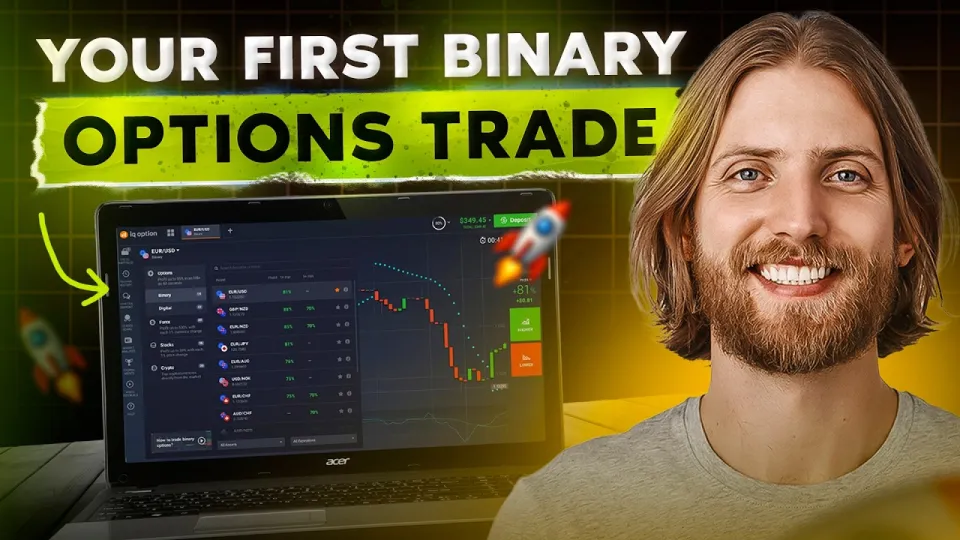
· based on the channel Binary options tutorial for beginners
Key takeaways
- Binary options are fixed-risk contracts: you stake an amount, pick a direction and an expiry, and either collect a fixed payout (typically 70–90%) or lose the stake.
- Every trade is a yes/no bet on whether the price of an asset will be above or below the strike at expiry — there is no partial exit and no stop-loss inside the trade.
- Three platforms are repeatedly pushed at beginners in this niche: Quotex, Pocket Option and Binarium, all reachable through affiliate links rather than direct sign-ups.
- A realistic first month is spent on a demo account with one asset and one expiry length, not on live money.
- Break-even maths matters: at an 80% payout you must win more than roughly 55.6% of trades just to stay flat.
Binary options are short-term contracts where you stake a fixed amount on whether an asset's price will be higher or lower at a set expiry time, and you either receive a fixed payout or lose the stake. For a beginner, the practical starting point is not a strategy but the mechanics: understanding payout percentages, expiry lengths, and why the odds are stacked against random clicking. A demo account on a broker such as Quotex lets you learn those mechanics without risking a cent.
What binary options actually are and how a trade works
A binary option is a yes/no contract with only two outcomes, which is where the name comes from. You choose an asset (currency pair, stock, commodity or crypto), an expiry (from 30 seconds up to a day or more), and a direction: Call if you expect the price to rise above the current strike, Put if you expect it to fall.
- Pick the asset and check its current price on the chart.
- Choose the expiry — a 1-minute contract and a 1-hour contract behave very differently.
- Enter the stake, which is your maximum possible loss on that trade.
- Press Call or Put and wait for expiry; the platform settles automatically.
The critical detail beginners miss: once the trade is open you cannot close it early, move a stop-loss or take partial profit. The stake is committed. If the price finishes exactly at the strike, most brokers return the stake (a "tie" or "at-the-money" result), but that rule varies by platform and should be checked in the terms before trading.
Payouts, break-even and the maths nobody shows you
A typical binary option payout sits between 70% and 90% of the stake, and that asymmetry defines the whole game. If a broker pays 80% on a winning trade but takes 100% on a losing one, your break-even win rate is not 50% — it is 100 / (100 + 80) ≈ 55.6%. At a 70% payout the required win rate climbs to roughly 58.8%.
That single calculation explains why so many beginners lose: a coin-flip strategy with a 50% hit rate is a slow bleed, not a break-even system. Before depositing anything, ask the platform what the payout is on the specific asset and expiry you plan to trade, because it changes by instrument and by time of day. Higher payouts on longer expiries are common, but longer expiries also mean more exposure to news and volatility.
A realistic first-month plan for a beginner
Treat the first month as tuition you are not paying for. The goal is repetition and observation, not profit.
- Open a demo account and fund it with the same amount you would realistically deposit — 100 to 200 units is enough to feel the pressure.
- Restrict yourself to one asset, ideally a liquid pair such as EUR/USD, and one expiry length, such as 5 minutes.
- Take 10–20 demo trades and log each one: time of day, direction, reason for entry, result.
- Review the log weekly and look for patterns — are losses clustered around news releases or around a particular hour?
- Only after a demo period of at least a few weeks with a stable process should real money be considered, and then at the smallest stake the platform allows.
Beginners who jump straight to live trading with a large deposit usually discover that demo discipline disappears the moment real money is on the line. The plan above exists to make that transition boring rather than dramatic.
Choosing a platform: Quotex, Pocket Option and Binarium
The three names that come up most often in beginner tutorials for this niche are Quotex, Pocket Option and Binarium, and all three are promoted through affiliate links rather than organic recommendations. That does not make them unusable, but it does mean you should verify licensing, withdrawal terms and minimum deposit yourself before signing up — the promoter earns a commission whether you profit or not.
Practical checks before depositing:
- Minimum deposit and minimum trade size (they determine how long your bankroll lasts).
- Payout percentages on the assets you actually intend to trade.
- Withdrawal methods, processing times and any fees.
- Whether a demo account is unlimited or expires.
- Whether the platform is accessible and regulated in your jurisdiction.
Binary options are banned or restricted for retail clients in several major markets, including the EU and the UK, on the grounds that the products are too risky for non-professional traders. Check your local rules first; if the product is unavailable where you live, no platform choice fixes that.
Common beginner doubts and mistakes
"Which strategy guarantees wins?" is the question every newcomer asks, and the honest answer is that none does — the payout structure means even a good strategy has losing streaks. A trader winning 60% of trades at an 80% payout is profitable, but a run of five losses in a row is entirely normal at that win rate and will wipe out a bankroll that is staked too aggressively.
The second common doubt is about links and access: tutorial channels often note that their links may stop working or get hidden, and point viewers to a pinned post or the comments for fresh ones. That is a reminder to treat any affiliate funnel as a commercial recommendation, not a review.
The third is about time: many beginners believe 30-second trades are easier because there is "less to analyse." In practice, ultra-short expiries are dominated by spread and noise, and the payout is usually worse. Longer expiries of 5–15 minutes give price action room to actually do what your analysis suggests.
All the links from the video
- Quotex: https://dakaklik.com/_quotex?creative_id=WzzpYsjS3ps
- Pocket Option: https://dakaklik.com/_PocketOption?creative_id=WzzpYsjS3ps
- Binarium: https://dakaklik.com/_Binarium?creative_id=WzzpYsjS3ps
- NordVPN: https://dakatop.link/Nord_us?creative_id=WzzpYsjS3ps
Bottom line
Binary options are a fixed-risk, fixed-reward product where the payout percentage, not the strategy, decides how often you must be right — roughly 56% at an 80% payout. The sensible start is a demo account, one asset, one expiry, a written trade log, and a stake size small enough to survive a normal losing streak. The channel Binary options tutorial for beginners walks through this same starting point in its video breakdown, and its main recommended platform is reachable via this Quotex registration link — use it to open a demo first, not to deposit on day one. Nothing here is financial advice; check the rules in your country before trading.
Source: Binary Options | Binary Options Tutorial for Beginners | Where Should You Start? · Markdown version
Questions & answers
How much money do I need to start trading binary options?
Most platforms set a minimum deposit of around $10–$50 and a minimum trade size of $1. You can learn everything on a free demo account first, so the real question is how much you can afford to lose entirely — a common rule is to risk no more than 1–2% of the balance per trade.
Are binary options the same as forex trading?
No. Forex trading lets you open a position with a stop-loss and close it at any moment, while a binary option locks the stake until expiry and pays a fixed amount or nothing. The underlying asset may be a currency pair, but the risk structure is completely different.
Why do so many people lose money with binary options?
Because the payout is below 100%: at an 80% payout you need about a 55.6% win rate just to break even, and random entries give roughly 50%. Add oversized stakes and revenge trading after losses, and the account drains quickly.
Is a 30-second expiry easier for beginners?
Usually not. Very short expiries are dominated by spread and random noise, offer lower payouts, and leave no time for price action to develop. Expiries of 5–15 minutes are more workable while you are learning.